
Instaswap vs. Centralized Exchanges: The Advantages of Decentralized Trading
Imagine trading cryptocurrencies like Bitcoin, Ethereum, Monero or Solana without a middleman holding your funds or asking for your ID. That's the power of InstaSwap, a decentralized exchange (DEX) aggregator that makes crypto trading simple, secure, and private. Unlike centralized exchanges (CEXs), InstaSwap lets you swap 600+ native assets across 67+ blockchains directly from your wallet, or even without one. In this guide, we break down the differences between centralized and decentralized exchanges, show why InstaSwap's approach is different, and help you decide if decentralized trading is right for you, even if you're new to crypto.
What Is a Centralized Exchange (CEX)?
A centralized exchange, or CEX, is like a traditional bank for crypto. It's a platform run by a company that handles your trades, stores your funds, and usually requires ID verification (KYC). You deposit your money or crypto into their wallets, and they match buyers and sellers using an order book, like a stock exchange. CEXs are user-friendly, offer fast trades, and support fiat-to-crypto purchases (for example USD to BTC), making them popular with beginners.
Pros:
- Easy-to-use interfaces and customer support.
- High liquidity for quick trades.
- Fiat on-ramps (for example credit card payments).
Cons:
- You don't control your funds ("not your keys, not your coins").
- Risk of hacks or shutdowns, like the FTX collapse.
- Requires KYC, reducing privacy.
What Is a Decentralized Exchange (DEX)?
A decentralized exchange, or DEX, is a peer-to-peer marketplace where you trade crypto directly with others using smart contracts: automatic, tamper-proof agreements on the blockchain. InstaSwap is a DEX aggregator, meaning every quote compares routes across THORChain, Chainflip, 1inch, Jupiter and 10+ decentralized venues to find the best price for your trade, like a travel app finding the cheapest flight. You keep control of your funds in your own wallet or use InstaSwap's walletless swaps, and no ID is needed.
Pros:
- Full control of your funds (non-custodial).
- No KYC for private trading.
- Resilient to censorship or shutdowns.
Cons:
- Can be slower during blockchain congestion.
- Lower liquidity for some tokens, which aggregation across many venues mitigates.
Advantages of Decentralized Trading with InstaSwap
InstaSwap takes decentralized trading to the next level:
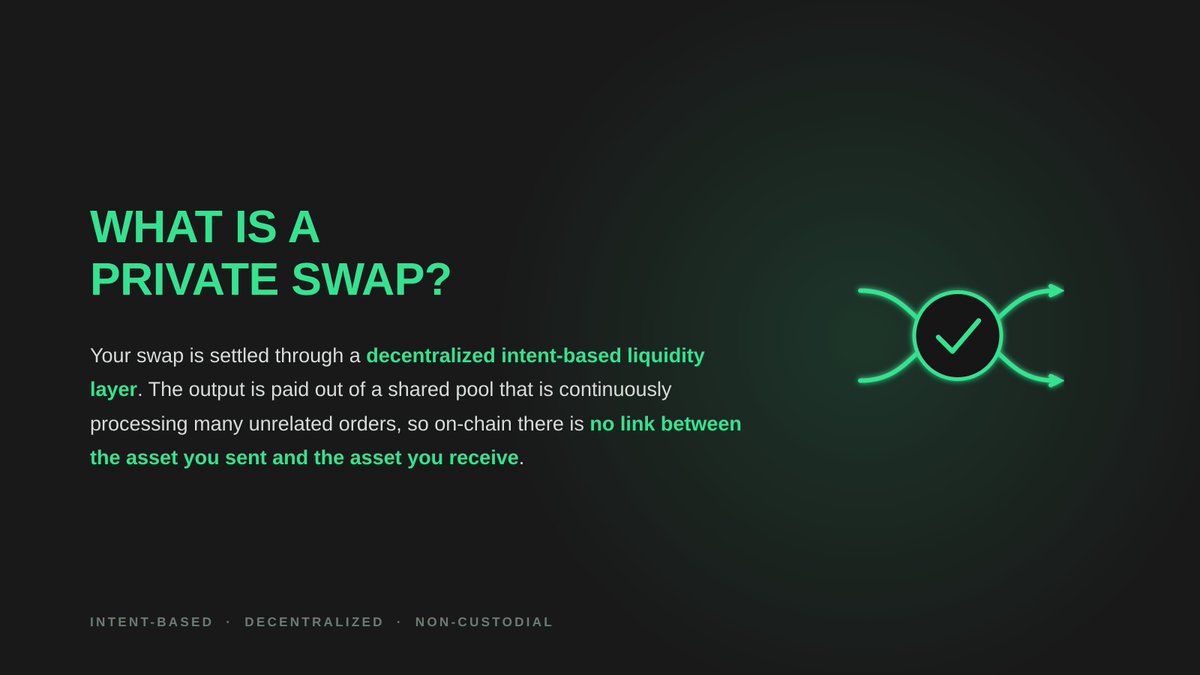
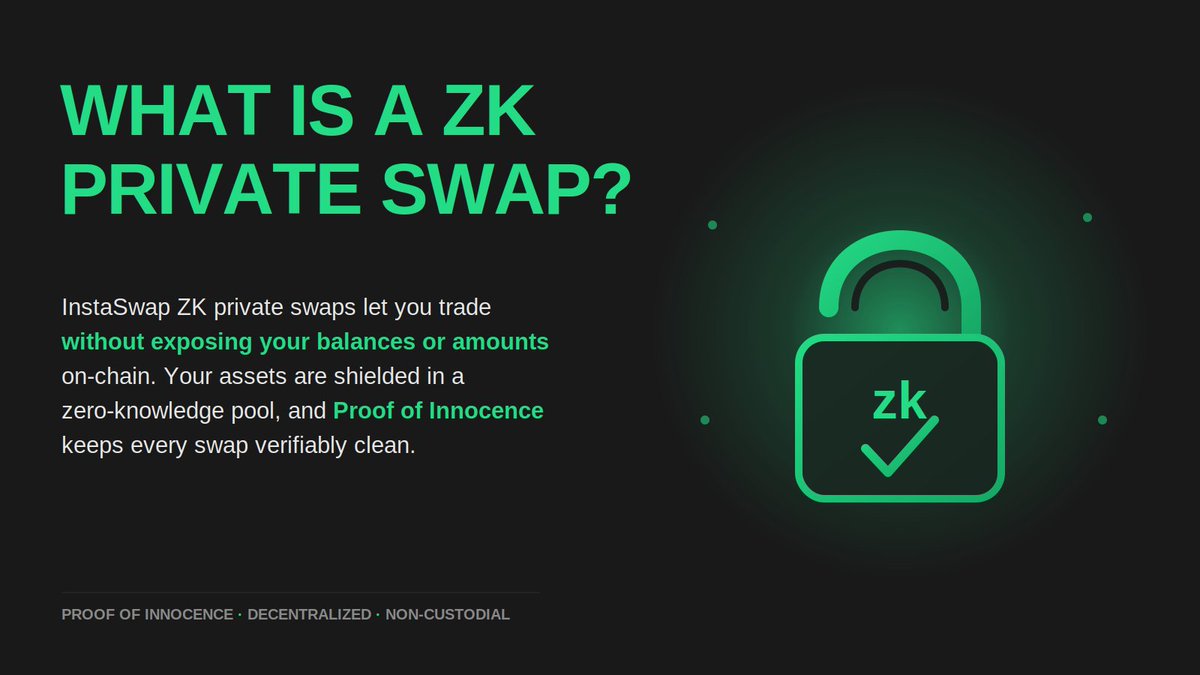
- Privacy first: Trade without sharing personal information, unlike CEXs that require KYC. Private and ZK private swaps break the public link between what you send and what you receive.
- Full control: Your funds stay in your wallet, reducing the risk of hacks or exchange failures.
- Massive selection: Swap 600+ native assets across 67+ blockchains, including Bitcoin, Ethereum, Solana and Monero.
- Walletless swaps: No wallet connection? No problem. Send to a deposit address and receive at the address you choose.
- Best rates: The aggregator compares 10+ decentralized venues on every quote for the best available price.
- Secure and transparent: Programmatic escrow contracts handle trades automatically, with an automatic refund if a swap cannot complete.
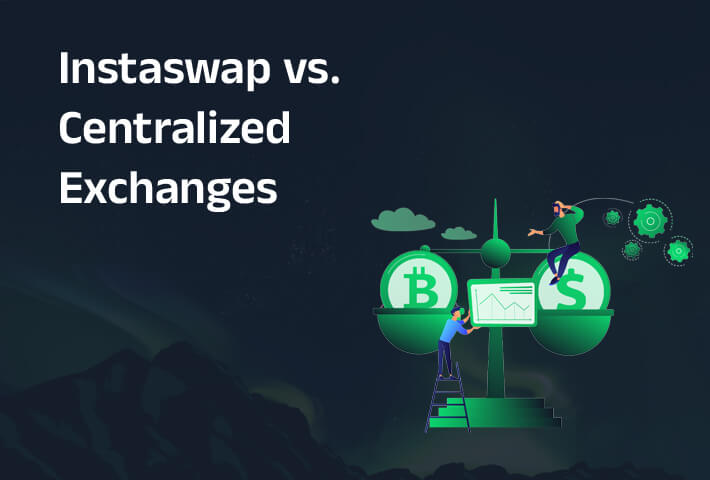
InstaSwap vs Centralized Exchanges
Here's how InstaSwap stacks up against CEXs:
InstaSwap (DEX aggregator)
- Custody: You control your funds (non-custodial).
- Privacy: No KYC, private trading.
- Security: Lower hack risk; funds stay in your wallet.
- Asset support: 600+ native assets, 67+ blockchains (including BTC, ETH, SOL, XMR).
- Fees: A small fee per swap, shown in the quote, plus network fees that vary by blockchain.
- Speed: Fast, typically minutes, though it can slow during network congestion.
- Ease of use: Simple interface, walletless option.
Centralized exchanges (CEX)
- Custody: The exchange holds your funds.
- Privacy: Requires ID verification.
- Security: Risk of hacks or insolvency.
- Asset support: Wide range, but often fewer tokens and wrapped or internal balances.
- Fees: Trading fees plus withdrawal fees and spreads that are not always visible.
- Speed: Near-instant internal trades, but withdrawals take extra time.
- Ease of use: User-friendly, but requires account setup and verification.
Example: Swapping BTC for XMR on InstaSwap settles native assets to the address you choose, and you keep custody the whole time. On a CEX you trade an internal balance, give up control and privacy, and still need to withdraw afterwards.
Most Common FAQ
What is decentralized trading on InstaSwap?
Decentralized trading on InstaSwap enables direct, non-custodial asset exchanges without intermediaries, ensuring secure and transparent transactions on decentralized liquidity.
How does InstaSwap keep trading costs low?
InstaSwap removes intermediary steps and uses optimized routing across multiple liquidity venues, so every quote reflects the best available rate. The fee is shown upfront in the quote.
Which blockchain networks are supported by InstaSwap?
InstaSwap supports 67+ networks, including Bitcoin, Ethereum, BNB Chain, Solana, Avalanche, Polygon, Arbitrum and Monero, enabling native cross-chain swaps.
Can I perform walletless swaps on InstaSwap?
Yes. Walletless swaps let you execute a trade without connecting any wallet: you send to a deposit address and receive at the address you specify.
What makes InstaSwap different from centralized exchanges?
InstaSwap's decentralized, non-custodial model offers full user control, privacy without KYC, and native settlement, compared with centralized exchanges that hold your funds and require identity verification. It also offers private and zero-knowledge private swaps for enhanced privacy.
How do market conditions affect my swaps?
Quotes reflect live liquidity, network fees and prices. Timing your swaps around network congestion can lower fees and improve the rate you receive.
What tools does InstaSwap offer for efficient trading?
InstaSwap features an aggregator that compares routes across leading decentralized venues, Split Swap to pay many wallets from one deposit, Payments for up to 100 recipients, and spot and perpetuals trading for active traders.
How can I improve my swap results?
Review your swap history, compare quotes across pairs, and stay informed on network conditions to get better rates.
Where can I learn more about decentralized trading?
Read how swaps work and the guides on the InstaSwap blog.
What benefits does non-custodial trading offer?
Non-custodial trading ensures you retain complete control over your funds, protecting you from counterparty failure and providing a transparent, secure trading experience.
Why Choose InstaSwap?
InstaSwap combines the best of DeFi with user-friendly features:
- Trade anywhere, anytime: Use any device, phone, tablet or desktop, with our mobile-optimized platform.
- Native cross-chain coverage: Real assets on real chains, with no wrapped tokens, across 67+ blockchains.
- Beginner-friendly: An intuitive design and walletless swaps make trading easy, even if you're new to crypto.
- Support: Get help via support@instaswap.com.
Whether you're trading for privacy, speed, or variety, InstaSwap lets you trade on your terms.
Conclusion
Decentralized trading on InstaSwap offers clear advantages over traditional centralized exchanges. With complete control over your assets, transparent fees, and native cross-chain swaps, InstaSwap lets you move value faster and more securely. Its multi-chain support and aggregated liquidity let you execute both simple BTC swaps and complex cross-chain swaps with confidence.
Next Steps
- Interested in how decentralized swaps actually work? Read How swaps work.
- Want to dive deeper into liquidity, blockchain networks, or cross-chain swaps? Browse the InstaSwap blog.
Remember: In the realm of non-custodial trading, "not your keys, not your crypto" remains a fundamental principle. Secure your digital assets with trusted wallets and maintain strong asset management practices to protect your investments.