
What is DeFi: A Comprehensive Guide to Decentralized Finance
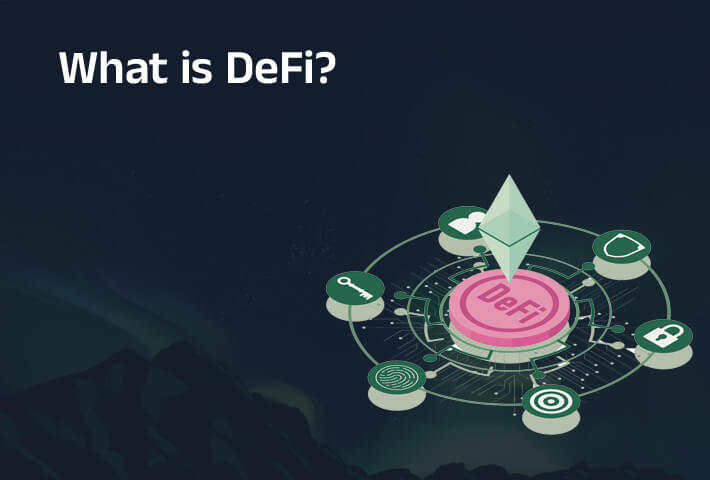
In the fast-changing world of finance, a new term has popped up creating a lot of buzz: DeFi, or Decentralized Finance. But what is DeFi, and why is it making such waves? In this article we explore the world of DeFi in depth, providing a comprehensive definition, explaining its main ideas, how it works, and what it might mean for the future of finance.
What Does Decentralized Finance Mean and How Does It Work?
Decentralized finance, or DeFi, means a financial system that doesn't have a central authority in charge. Instead, it works using open-source protocols, smart contracts, and blockchain technology. Let's take a closer look at what this means and how it works:
Meaning
Decentralized Finance removes the middlemen from financial transactions. This means nobody has full control, giving people the ability to carry out transactions on their own. It stands for the idea of direct, peer-to-peer dealings where you don't need to trust anyone. All actions are open to see, and every exchange gets recorded in a public ledger.
How It Works
DeFi runs on distributed networks that use smart contracts: bits of code that run by themselves to enforce deal terms. When certain conditions are met, these contracts trigger financial actions like lending, borrowing, or swapping assets.
Core Components
- Smart contracts: These form the core of DeFi. They ensure transactions happen automatically without human intervention.
- Blockchain technology: This distributed ledger keeps a record of all transactions, ensuring everything is transparent and immutable.
- Interoperability: Different DeFi systems can work together seamlessly, allowing users to create complex financial products and services that operate across multiple platforms. This feature, known as composability, is a key strength of the DeFi space.
This fundamental change in how banks and other financial services work doesn't just boost efficiency. It also makes financial tools available to everyone, allowing people all over the world to use them with just internet access, effectively turning DeFi into a global, non-custodial bank.
Main Ideas Behind DeFi
DeFi stands on a few key ideas that set it apart:
- Decentralization: No single authority runs the system. The community of users makes decisions together through decentralized governance.
- Transparency: Anyone can check all transactions and smart contract code on the blockchain. This openness allows for public auditing.
- Interoperability: DeFi protocols and applications work well together. They can mix and match, showcasing the composability of different parts of DeFi.
- Open access: DeFi services are available to everyone with internet access. It doesn't matter where you live or what your financial background is. This makes it a permissionless network.
- Self-custody: Users always have full control of their money. DeFi applications don't hold onto your funds for you, making them non-custodial.
How DeFi Works in Practice
DeFi runs on smart contracts, which are self-executing programs on the blockchain. These contracts set the rules and carry out transactions when certain conditions are met. The programmability of these contracts allows them to handle complex financial matters. Here's an example to make it clearer:
Let's say you need to borrow money. In the traditional way, you'd visit a bank, submit your paperwork, wait for approval, and pay the bank interest. With DeFi, you can borrow directly from other users through a DeFi lending platform. A smart contract handles everything, from securing funds to disbursing the loan and managing repayments. This setup allows for collateralized loans and even flash loans, which are unique to the DeFi space.
Examples of DeFi Applications
DeFi has many different applications and services, showcasing a wide range of use cases:
- Lending and borrowing: Platforms like Aave and Compound act as decentralized lending protocols. Users can lend and borrow cryptocurrencies without intermediaries.
- Decentralized exchanges (DEXs): Uniswap and SushiSwap let people trade cryptocurrencies without a central middleman. These exchanges use liquidity pools, maintained by liquidity providers, to enable trading.
- Stablecoins: Cryptocurrencies like DAI, created by MakerDAO, offer stable value tied to traditional currencies. Some projects are working on cross-blockchain stablecoins and multi-collateral stablecoins backed by various types of collateral.
- Derivatives: Platforms like Synthetix let users create and trade synthetic assets, expanding the range of digital assets you can trade in DeFi.
- Asset management: Services like Yearn Finance offer automated investment strategies. They work as algorithmic money markets to optimize your returns.
These examples show how flexible and groundbreaking the DeFi development scene can be.
DeFi vs Traditional Financial System
When we look at DeFi side by side with the traditional financial system, we see some significant differences:
- Accessibility: DeFi welcomes everyone, while traditional banks often set tough entry rules. DeFi provides banking-like services to anyone with internet access.
- Transparency: You can see all DeFi transactions, unlike banks' closed systems.
- Speed: DeFi completes transactions in seconds or minutes, while bank transfers can take days.
- Control: DeFi users own their money, unlike banks that hold customers' cash.
- Innovation: DeFi allows quicker creation and testing of new financial products and services.
Advantages and Disadvantages of DeFi
Like any new technology, DeFi has its upsides and downsides:
Upsides
- Financial inclusion: Provides financial services to people who can't use regular banks.
- Transparency and security: Anyone can check all transactions, and they're protected by strong cryptography.
- Efficiency: Automated processes cut costs and speed things up.
- Innovation: Helps create new financial products and services.
- Global access: Anyone with internet can use these services, demonstrating how permissionless networks can operate.
Downsides
- Technical complexity: Non-technical users often struggle to grasp and use DeFi.
- Volatility: Cryptocurrencies and other digital assets in DeFi can see huge price swings.
- Regulatory uncertainty: Many jurisdictions still lack clear laws for DeFi services.
- Smart contract risks: Flaws in smart contract code can cause major financial losses.
- Scalability issues: Some blockchain networks struggle with high transaction loads.
The Future of DeFi
As the DeFi space continues to grow, we'll likely see:
- Wider adoption: More traditional institutions might start to offer DeFi options, connecting traditional and decentralized finance.
- New regulations: Clearer laws could emerge to govern DeFi activities, which might affect how DeFi applications evolve.
- Improved user experience: Making DeFi easier for regular people to use could accelerate adoption.
- Enhanced interoperability: Moving assets between different blockchain networks could become simpler.
- Integration: We might see links between DeFi and traditional financial systems, creating a more interconnected financial world.
Most Common FAQ
Is DeFi safe to use?
DeFi has many security features, but it also has risks. You should do your homework on platforms and get to know the risks in the DeFi space.
Do I need to be tech-savvy to use DeFi?
Some tech know-how helps, but many DeFi platforms are trying to make their services easier to use with simpler interfaces.
Can I lose money in DeFi?
Yes. DeFi, like any financial system, has risks. These include vulnerabilities in smart contracts, market volatility, and potential scams.
What's the difference between DeFi and Bitcoin?
Bitcoin is a type of digital currency, while DeFi is a group of financial applications that often use Bitcoin and other cryptocurrencies.
Are DeFi transactions anonymous?
DeFi transactions link to blockchain addresses instead of personal details. This makes them pseudonymous, but not secret.
Can DeFi replace traditional banks?
DeFi provides many bank-like services. Right now, people see it as complementing regular banks, not replacing them entirely.
What's yield farming in DeFi?
Yield farming involves lending or staking crypto assets to earn returns, often in the form of additional crypto tokens.
How do I get started with DeFi?
To begin, you need a crypto wallet and some cryptocurrency. You can then explore different DeFi platforms and services, including decentralized exchanges and lending protocols.
Are there fees for using DeFi services?
Yes, most DeFi transactions incur costs, often called "gas fees" on networks like Ethereum. These can vary based on network congestion.
What are governance tokens?
Governance tokens give owners the right to vote on proposed changes to a DeFi protocol. This allows for decentralized decision-making and control.
Where InstaSwap Fits In
InstaSwap applies the same DeFi principles to swapping: decentralized routes, non-custodial settlement, and no account or KYC. For businesses, our API and widget solutions let you add decentralized trading to your platform with DEX swaps, walletless DEX swaps, or both. Practical benefits include:
- Enhanced user experience: A smooth, intuitive trading interface that supports both API-driven transactions and embedded widget swaps.
- Increased flexibility: Offer both DEX swaps and walletless DEX swaps, so users can participate regardless of wallet compatibility.
- Competitive execution: Optimized routing over aggregated decentralized liquidity, so every quote reflects the best available rate.
- Seamless cross-chain swaps: Native cross-chain swaps across supported chains, without relying on traditional intermediaries.
- Self-custody throughout: Users retain full control of their keys and funds at every step.
Conclusion
Decentralized Finance (DeFi) represents a paradigm shift in how we think about and interact with financial services. By leveraging blockchain technology and smart contracts, DeFi offers a more open, transparent, and accessible financial system. While it comes with its own set of challenges and risks, the potential for innovation and financial inclusion makes DeFi a fascinating space to watch.
As the DeFi ecosystem continues to evolve, it's crucial for users to stay informed, understand the risks, and approach these new financial tools with caution. Whether DeFi will revolutionize the entire financial system or coexist with traditional finance remains to be seen, but its impact on the world of finance is undeniable. The future of DeFi development looks promising, with ongoing improvements in scalability, user experience, and integration with existing financial systems.
Next Steps
- Read the docs: See the InstaSwap documentation for the API, the widget and how routing works.
- Browse related articles: Learn more about liquidity pools, blockchain networks, and cross-chain swaps on the InstaSwap blog.
Keep in mind: The cornerstone of decentralized trading is the adage, "If you don't control the keys, you don't truly own the cryptocurrency." Protecting your digital assets through robust, self-custodial methods not only secures your investments but also lays the groundwork for enduring prosperity in the crypto space.